When I wrote here in August about my first novel, I said I was in the final edit and expected to publish it in September. I remember feeling quite sure about that at the time. I’d been through the manuscript so often that I thought I knew where all the difficult bits were. It turned out I was still finding them in November.
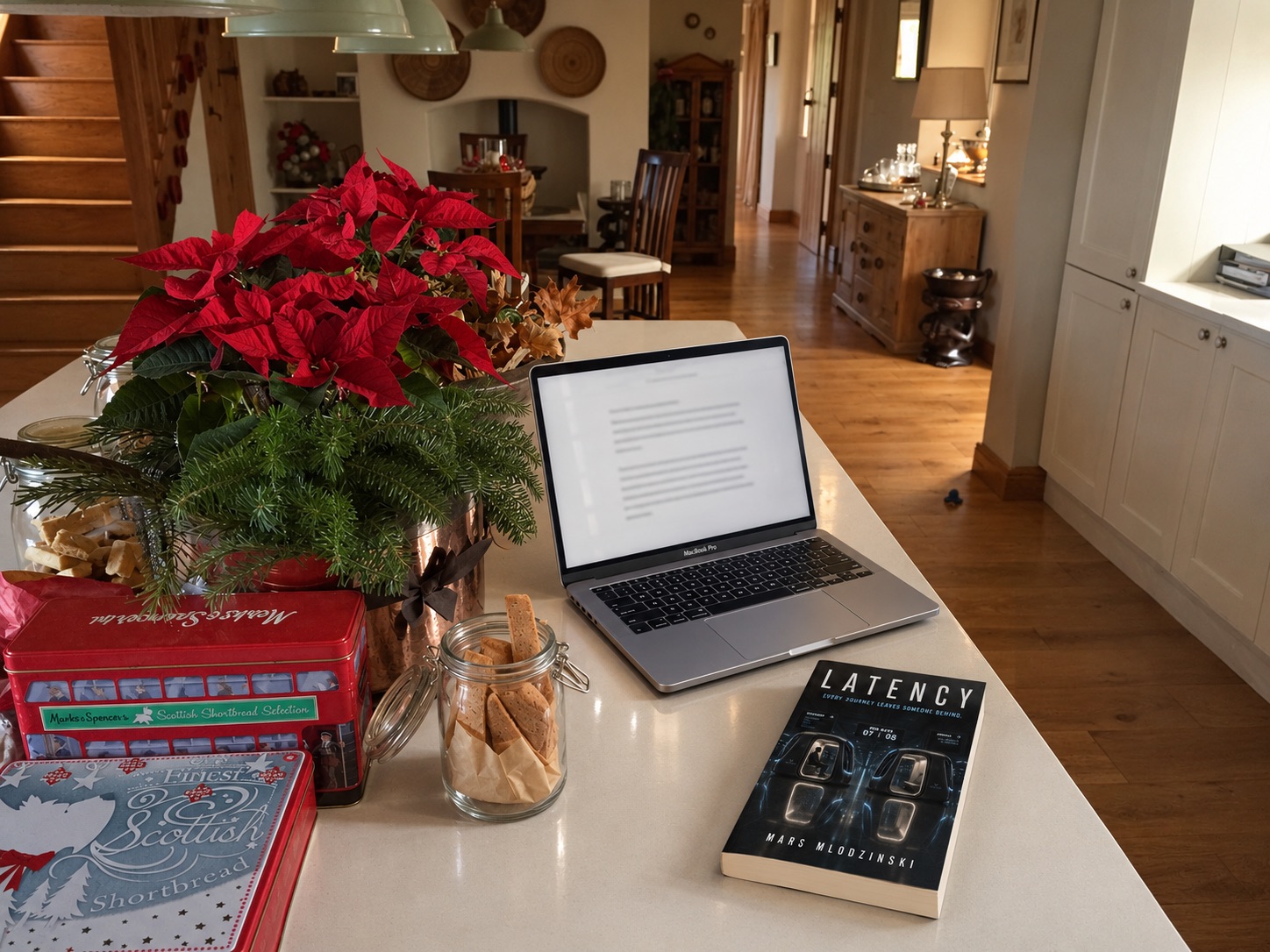
Latency is finally out in paperback and on Kindle. I thought I’d feel like celebrating the moment it happened. Instead, I felt an enormous, rather quiet relief. For years there had been something else to do before anyone could read it. Now somebody can open the first page while I’m getting on with my day, and I won’t even know about it. I’m still getting used to that.
Most of the book was written in the time left over from everything else. Evenings, weekends and nights when I’d meant to go to bed rather earlier than I did. It’s been a difficult year, both personally and professionally, and there were stretches when I couldn’t give the novel anything like the attention I wanted to. Each time I came back, I had to find my way into a world I knew intimately and a manuscript that still had the capacity to make me wonder what on earth I’d been thinking. I was always glad to be back in it, even on the days when I got very little done.
I’d spent most of my working life writing or editing in one form or another, and I went into this with a fairly healthy opinion of how much that experience would help. In journalism, I’m used to working out what a reader needs to know and finding the clearest way to tell them. In a novel, that helpful explanation can give away the thing you’ve spent a hundred pages making someone curious about. There were times when I’d change a line of dialogue, then have to go back through the book to work out who knew what and when they’d found out. I’ve read novels all my life without giving much thought to the person who had to sit at a desk and untangle all of that. I give them a lot more thought now.
The manuscript went past 700 pages at one point. The paperback is just over 500, which still strikes me as an absurdly large object for something that began as an idea I carried around in my head. I expected the writing to be the hard part. I hadn’t reckoned with how attached I’d become to things that needed to come out, or how long I could spend persuading myself that one more pass would make me feel ready. Towards the end I could always find a sentence to improve. Finding one was quite comforting. It gave me a perfectly respectable reason to keep the book to myself for another evening.
I’m proud of Latency. I can still see things I’d do differently, and I suspect I always will. I also know how much pleasure I took in making it, even when it was going badly. I spent years coming back to the same people and places, sometimes for twenty minutes and sometimes for much longer than I’d intended. One of the nicest things about finishing is that I finally get to find out what somebody else makes of them.
If you missed the original post, Latency is a science-fiction mystery set in 2047, when you can step into a pod and arrive on the other side of the world eleven seconds later. By then, people have taken to teleportation the way we take to anything that makes the day easier. They have places to be. They trust the system when it tells them they’ve arrived. I spent an unreasonable amount of time thinking about what it would take for someone to start doubting that.
Thank you to everyone who read the August post and took an interest in this rather unexpected thing I’d been doing. If you’re curious about where it all ended up, the opening chapter is there for you. Read Chapter One free on readlatency.com.